
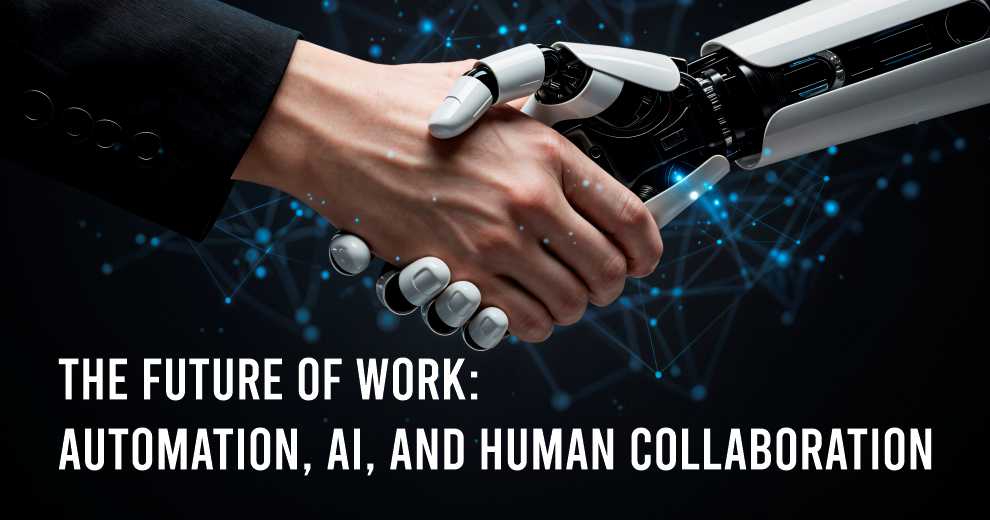
The future of work is undergoing a profound transformation driven by rapid advancements in automation and artificial intelligence (AI). As organizations adapt to a digital-first world, the traditional workplace is evolving into a dynamic ecosystem where humans and intelligent machines collaborate to achieve greater efficiency and innovation.
Automation is no longer limited to repetitive manufacturing tasks. Today, it is integrated into various business functions, from customer service chatbots to advanced data analytics and decision-making systems. AI-powered tools are enabling organizations to streamline operations, reduce costs, and improve productivity. However, rather than replacing human workers, these technologies are reshaping job roles and creating new opportunities for growth.
The Rise of Human-AI Collaboration
One of the most significant trends in 2026 is the shift toward human-AI collaboration. Businesses are recognizing that the true potential of AI lies in its ability to complement human capabilities, not replace them. While machines excel at processing large volumes of data and performing repetitive tasks with precision, humans bring creativity, emotional intelligence, and critical thinking to the table.
This synergy is transforming industries such as healthcare, finance, and marketing. For instance, AI can analyze consumer behavior patterns, but it is human insight that crafts compelling strategies and builds meaningful customer relationships. Similarly, in corporate decision-making, AI provides data-driven recommendations, while leaders make strategic judgments based on experience and vision.
Skills for the Future Workforce
As automation continues to evolve, the demand for new skill sets is increasing. Technical skills such as data analysis, AI literacy, and digital proficiency are becoming essential. At the same time, soft skills like adaptability, communication, and problem-solving are gaining greater importance.
Organizations are investing in upskilling and reskilling initiatives to prepare their workforce for this transition. Continuous learning is no longer optional—it is a necessity in a rapidly changing job market.
Challenges and Opportunities
Despite its benefits, the integration of AI and automation presents challenges. Concerns about job displacement, data privacy, and ethical use of technology remain significant. Companies must address these issues by adopting transparent practices and fostering a culture of trust.
At the same time, the opportunities are immense. Businesses that successfully integrate automation with human collaboration can unlock unprecedented levels of innovation and competitiveness.
Conclusion
The future of work is not about humans versus machines—it is about humans and machines working together. As organizations embrace this collaborative model, they are not only enhancing productivity but also redefining what it means to work in the modern era. The key to success lies in balancing technological advancement with human potential, creating a workplace that is both efficient and inspiring.