
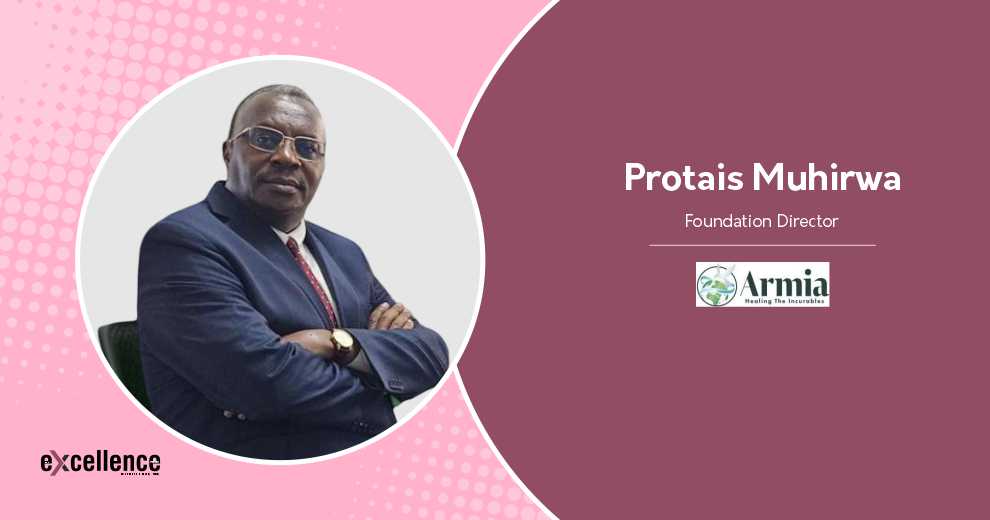
In an era defined by global migration, social fragmentation, and complex integration challenges, leaders who dedicate their lives to community empowerment stand as catalysts for meaningful change. Among them is Protais Muhirwa, the Foundation Director of ARMIA (Active Refugee and Migrant Integration in Australia – currently ARMIA Healing the Incurables), an organization that has transformed the lives of thousands of refugees, migrants, and disadvantaged individuals in Australia.
Through a combination of compassion, strategic leadership, and practical solutions, Muhirwa has built a model of social integration that extends beyond assistance to create sustainable pathways toward dignity, independence, and belonging.
Early Foundations and Education
Muhirwa’s journey toward becoming a community development leader began with a strong academic foundation and a deep awareness of the challenges faced by marginalized communities worldwide. He earned a Master of Science degree from Tashkent University, later complementing it with advanced studies in Human Resource Management and International Issues in Community Development at the University of Queensland. These academic experiences equipped him with the analytical and strategic tools necessary to address complex social problems involving migration, employment, and cultural integration.
More importantly, his education nurtured a worldview centered on empowerment rather than dependency. Muhirwa’s approach to community development emphasizes practical skills, long-term integration, and self-reliance. This philosophy has remained central throughout his professional journey and continues to shape the structure and programs of ARMIA.
Early Professional Journey
Before establishing ARMIA, Muhirwa gained significant experience working with refugees and migrants through his leadership role at the Misericordia International Centre in South Africa, a charity he had created to holistically empower hopeless refugees from war-torn countries in Africa and Middle East. There, the transformational leader collaborated closely with refugees and migrants seeking stability and new opportunities after experiencing significant hardship.
His work at the center focused on education, skills training, material assistance, counselling, and community integration. Through these programs, thousands of refugees and migrants gained the tools to rebuild their lives. Many went on to become professionals in fields such as medicine, law, business, academia, and politics across multiple continents.
Witnessing these transformations deeply shaped Muhirwa’s perspective. He realized that sustainable integration requires more than short-term assistance. Refugees and migrants often face challenges long after initial settlement support ends, including unemployment, social isolation, and cultural barriers. These insights would later inspire the creation of a new organization focused on addressing these long-term needs.
The Birth of ARMIA
In response to these challenges, Muhirwa founded ARMIA in Sunnybank, Queensland. The organization was created with a clear purpose: to holistically and person-centredly support refugees and migrants who had already completed the Australian government’s five-year settlement program but still struggled to fully integrate into society.
ARMIA was designed not simply as a service provider but as a Multicultural Family Support Hub, a place where individuals could receive holistic support addressing employment, education, mental health, and social inclusion.
Under Muhirwa’s leadership, the organization has focused on bridging what he describes as the “silent gap” between settlement assistance and true socio-economic participation. The goal is to help individuals move from dependency to contribution, enabling them to become active participants in the workforce and their communities.
Over time, ARMIA evolved into ARMIA Healing the Incurables, reflecting a broader mission to address deeper social challenges affecting marginalized populations.
Expanding Impact and Services
ARMIA’s programs cover a wide range of support services designed to tackle the root causes of social exclusion. These include employment training, English language education, life-skills development, counseling services, and community engagement initiatives.
The organization also supports people with disabilities through programs connected with Australia’s National Disability Insurance Scheme (NDIS), offering tailored assistance that promotes independence and improved quality of life. Additionally, ARMIA provides aged care support and services that help seniors remain active members of their communities. The two programs enable ARMIA to proudly support persons with disabilities and elderly people to live a normal life with their families.
In 2018, Muhirwa expanded the organization’s scope to include mainstream disadvantaged Australians and Indigenous communities, reflecting his belief that social integration must be inclusive and collaborative. By encouraging interaction between different communities, ARMIA fosters cultural understanding and strengthens social cohesion.
Programs such as the L’Oasis community café were created to address unemployment and social disconnection by offering training opportunities while creating spaces for interaction and community building.
Leadership Style and Organizational Culture
Muhirwa’s leadership philosophy is grounded in empathy, collaboration, and empowerment. Rather than relying on hierarchical structures, he promotes a horizontal leadership style that encourages participation, teamwork, and shared responsibility within the organization.
Today, ARMIA operates with a diverse team of professionals and volunteers from multicultural backgrounds. This diversity strengthens the organization’s ability to understand and practically respond to the needs of different communities.
The transformational leader believes that organizations dedicated to social transformation must embody the values they promote. Within ARMIA, this translates into a culture of respect, accountability, and collective problem-solving. Employees and volunteers are encouraged to work closely with clients, focusing on personalized solutions that address both immediate needs and long-term goals.
Achievements and Recognition
Over more than two decades of community development work, Muhirwa has built a reputation as a visionary leader in migrant integration and social inclusion.
Under his direction, ARMIA has supported thousands of individuals, and families, in transitioning from welfare dependency to employment, entrepreneurship, and community participation. By connecting clients with training opportunities, employment pathways, and support networks, the organization has helped many rebuild their confidence and economic independence.
ARMIA’s impact also extends beyond individual success stories. The organization has established partnerships with businesses, community groups, and government agencies, creating a network that amplifies opportunities for marginalized individuals.
Muhirwa’s work demonstrates how compassionate leadership combined with strategic planning can create lasting change within communities.
Vision for the Future
Looking ahead, Muhirwa continues to expand ARMIA’s mission and reach. His vision is to build a society where refugees, migrants, and disadvantaged individuals are not defined by their past struggles but by their potential contributions to the future.
Future initiatives aim to strengthen employment pathways, expand community partnerships, and develop innovative programs that address emerging challenges related to migration, workforce integration, and social cohesion.
Muhirwa also hopes to scale ARMIA’s model so that it can be replicated in other regions, demonstrating how holistic support systems can help marginalized populations become thriving contributors to society.
For him, the ultimate goal is not simply to provide assistance but to cultivate environments where people can reclaim their dignity, rebuild their lives, and participate fully in the communities they call home.
A Legacy of Compassionate Leadership
Muhirwa’s journey reflects the power of vision combined with determination. From his early work with refugees in South Africa to the establishment and growth of ARMIA in Australia, his career has been defined by a commitment to empowering those often overlooked by traditional support systems.
Through innovative programs, inclusive leadership, and an unwavering belief in human potential, the transformational leader has created a framework that transforms compassion into tangible opportunities.
As global societies continue to grapple with issues of migration, inequality, and social integration, Muhirwa’s work offers an inspiring example of how thoughtful leadership and community-focused strategies can create lasting impact—one life, one family, and one community at a time.