Building an Influential Ecosystem at the Crossroads of Senior Care, Caregiving, Education, Advocacy, and Media
Recognizing visionaries in senior care means looking for individuals who have transformed personal hardship into public purpose, who have taken the isolating and often invisible work of caregiving and turned it into a movement of education, advocacy, and connection. It means honoring those who understand that behind every statistic on aging, dementia, and long-term care is a family navigating uncertainty, and who have dedicated their careers to ensuring that no one has to face that uncertainty alone.
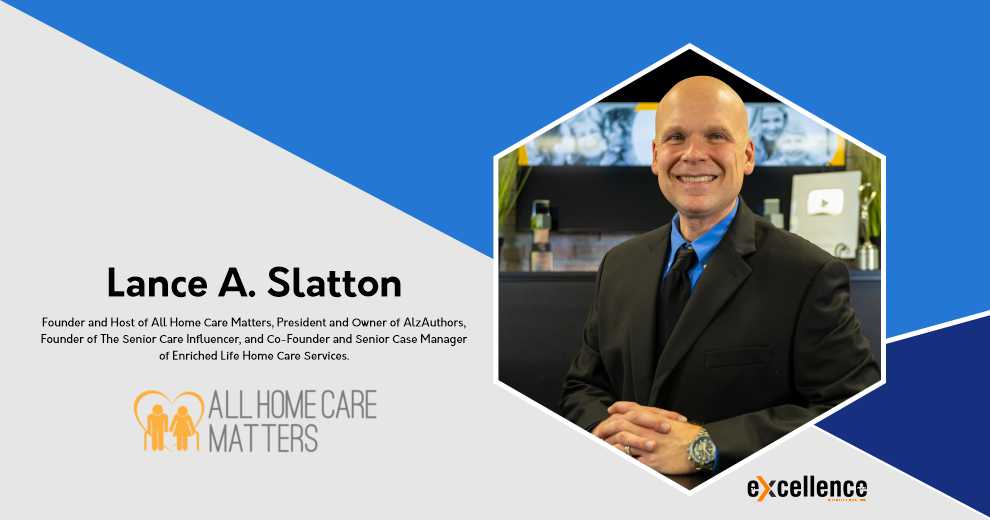
Few figures embody this spirit more fully than Lance A. Slatton, whose work has helped reshape how families understand and navigate senior care. With more than 20 years of experience in healthcare and senior care, he is the Founder and Host of All Home Care Matters, President and Owner of AlzAuthors, Founder of The Senior Care Influencer, and Co-Founder and Senior Case Manager of Enriched Life Home Care Services. He is also the award-winning author of The All Home Care Matters Official Family Caregiver’s Guide, which received an International Impact Book Award and was recognized by BookAuthority as one of the Best New Home Care Books.
Through the platforms he has built and the communities he has served, Slatton, widely recognized as “The Senior Care Influencer,” has become a respected national and international voice at the crossroads of home care, family caregiving, senior care, dementia advocacy, and healthcare media.
His influence extends across caregiving education, publishing, digital media, professional advocacy, and industry leadership. In addition to receiving multiple healthcare and senior care influencer honors, Slatton has been selected to serve as a juror for the Academy of Interactive & Visual Arts’ W3 and Communicator Awards and as a Distinguished Juror for the 2026 Davey Awards.
A Father’s Care, A Career’s Calling
His work began with family, not media. When Slatton’s father required nearly three years of around-the-clock care and underwent seven major surgeries, he and his family experienced firsthand the uncertainty, exhaustion, and responsibility that millions of caregivers face every day. The experience profoundly reshaped his perspective and ultimately redirected the course of his career. It reinforced his belief that families need more than services. They need trustworthy education, practical guidance, and the reassurance that they are not alone. Every initiative Slatton has built since has been driven by a commitment to making senior care more understandable, compassionate, and accessible.
Lessons Learned at His Father’s Side
Caring for his father became one of the most defining experiences of Slatton’s life, shaping both his personal perspective and professional philosophy. It taught him that compassionate care is found in the smallest details: preserving familiar routines, recognizing subtle changes, respecting individual choices, communicating with honesty, and seeing the person beyond a diagnosis. His work alongside families, professional caregivers, clinicians, advocates, authors, and people living with dementia has continually reinforced the same lesson. In his view, exceptional care is never simply delivered to an individual. It is built collaboratively with the person receiving care and with the family members and loved ones who know them best.
Building a Family-Centered Model of Care
When Slatton and his family co-founded Enriched Life Home Care Services, they recognized a significant gap between the promises made to families and the reality of truly person-centered care. Far too often, care was approached as a checklist of tasks rather than a relationship grounded in an individual’s history, preferences, dignity, and personal goals. Guided by this realization, they set out to build a family-centered home care organization that prioritized listening, actively involved families in the care journey, empowered caregivers, and enabled older adults to remain safely connected to the lives and communities they cherished.
Giving Families a Trusted Platform
The idea for All Home Care Matters emerged from Slatton’s belief that caregivers deserved information that was both credible and compassionate. Too often, families encountered advice that was either scattered across multiple sources or presented in language that felt inaccessible during already stressful times. By combining expert insights with authentic personal stories, he created a platform designed to educate, encourage, and empower.
Since its launch, the platform has produced more than 500 episodes, attracted over 112,000 YouTube subscribers, generated more than 26 million video views, earned YouTube’s Silver Creator Award, ranked among the top 0.05% of podcasts worldwide, and been recommended by AARP as a caregiving podcast. For him, however, the platform’s greatest achievement lies in the impact it has on families and care professionals who say its conversations have helped them make informed decisions, ask better questions, and feel less alone throughout their caregiving journeys.
Confronting the Myths of Aging and Dementia
Throughout his work, Slatton has sought to challenge long-standing assumptions about aging and dementia. He believes one of the most damaging misconceptions is that older adults inevitably lose their purpose, identity, and ability to contribute as they age. In the same way, he argues that home care is often misunderstood as little more than practical assistance, when its true value lies in preserving independence, enhancing safety, and helping families navigate the complexities of caregiving.
He also emphasizes that Alzheimer’s disease and other forms of dementia cannot be defined by memory loss alone. They affect communication, judgment, relationships, and a person’s sense of self, with each individual’s experience unfolding differently. By encouraging greater awareness and understanding, he hopes to replace fear with knowledge and promote earlier planning alongside compassionate, person-centered care.
Storytelling as a Tool for Dignity
Behind every dementia diagnosis is a deeply personal story, and Slatton believes those stories deserve to be heard. While statistics provide valuable insight into the scale of the disease, lived experiences reveal its emotional, social, and human dimensions. Through AlzAuthors, books and educational resources capture the voices of individuals living with dementia, caregivers, healthcare professionals, and advocates whose experiences offer encouragement, practical guidance, and hope. Their stories help readers better understand the challenges ahead while fostering empathy and connection. As President and Owner of AlzAuthors, he is dedicated to growing the organization into a trusted global destination where storytelling serves as both education and advocacy, reducing stigma while preserving dignity and identity.
An Ecosystem Built for Impact
Over the years, Slatton has deliberately expanded his work beyond individual initiatives to build a connected support ecosystem for older adults, caregivers, and healthcare professionals. Rather than addressing caregiving from a single perspective, he has created multiple avenues through which families can access reliable information, practical resources, and compassionate guidance.
Through All Home Care Matters, AlzAuthors, Enriched Life Home Care Services, The Senior Care Influencer, his published and forthcoming books, and collaborations across the senior care sector, he has developed platforms that educate, connect, and advocate for those navigating the realities of aging. While Slatton appreciates the recognition reflected in industry awards and the continued growth of his audience, he believes the most meaningful measure of success comes from hearing how his work has helped families feel better prepared, more confident, and less isolated during some of life’s most difficult moments.
Leading by Staying Close to the Work
Slatton’s leadership philosophy is rooted in a simple principle: stay close to the people the work is intended to serve. He views leadership not as a title or a platform, but as a responsibility to listen, act with purpose, and use influence in service of others. In his experience, credibility is earned through consistency, thoughtful preparation, transparency, and a continuous willingness to learn. He also believes the most effective leaders create ecosystems that amplify diverse voices, foster meaningful connections, and transform individual expertise into collective impact.
The Interconnected Crisis Facing Senior Care
Having worked closely with families, caregivers, and healthcare professionals, Slatton believes the senior care sector is confronting one of the most significant periods of change in its history. He identifies workforce shortages, increasing healthcare costs, caregiver burnout, fragmented care delivery, inadequate respite services, and limited awareness of dementia and long-term care as the sector’s most urgent concerns.
These challenges, he says, often leave families without the information or support needed to make informed decisions at critical moments. Slatton also underscores the importance of expanding equitable access to quality care for rural and underserved populations. Addressing these issues will require sustained investment in caregivers, stronger collaboration across healthcare and community services, and person-centered care models that prioritize continuity, dignity, and quality of life.
Bringing Private Struggles into Public View
One of the greatest challenges Slatton has faced has been advocating for family caregivers within systems that often rely heavily on their contributions while providing insufficient recognition, training, or support. He has found it particularly difficult to bring the often private realities of caregiving into the public conversation without losing sight of the humanity and dignity of those living through these experiences.
That journey has reinforced the importance of remaining persistent, guided by evidence, and deeply connected to the real stories of families and caregivers. In his view, lasting progress depends not only on raising awareness but also on building trust and fostering collaboration among families, care providers, policymakers, and industry leaders.
A Call to Formally Recognize Family Caregivers
Behind every older adult receiving care is often a family caregiver quietly managing countless responsibilities. Slatton believes these individuals should be formally recognized as an essential part of the healthcare and long-term care workforce. He argues that recognition should be backed by tangible support, including caregiver education, respite services, care navigation, workplace protections, and financial assistance. As family caregivers increasingly oversee medications, appointments, transportation, personal care, and critical medical decisions without formal training, he believes investing in their success is essential to improving care outcomes, supporting families, and building a more resilient care system.
Innovation That Preserves the Human Connection
When discussing the future of senior care, Slatton consistently returns to one principle: technology should support people, not replace them. He believes the greatest advances will come from innovations that ease the daily realities of caregiving while preserving empathy and human connection. These include discreet safety systems, thoughtfully designed AI tools, coordinated care models, caregiver education, home accessibility improvements, and solutions that safeguard memory and personal identity. Combined with stronger community-based support programs, these innovations have the potential to reshape aging. Their success, he says, will depend not on novelty, but on whether they are practical, affordable, ethical, and capable of improving everyday experiences for older adults and caregivers alike.
Expanding the Ecosystem, One Project at a Time
Slatton continues to expand the senior care media ecosystem by connecting All Home Care Matters, AlzAuthors, The Senior Care Influencer, home care, publishing, and advocacy into a connected ecosystem for education, awareness, and meaningful impact. Through these initiatives, he is developing new educational content, strengthening collaborations with policymakers, researchers, care leaders, authors, and responsible innovators, and elevating conversations that have the potential to influence professional practice and public understanding. He is also advancing his forthcoming book, Caregiving in America, positioning it as a comprehensive contribution to the national conversation on caregiving and the future of senior care.
The Discipline Behind the Purpose
Consistency, preparation, humility, and follow-through shape Slatton’s daily work. He believes in listening before speaking, remaining curious, and recognizing that every statistic represents a person, family, or lived experience. He is equally committed to the work that often goes unnoticed: conducting research, responding thoughtfully, verifying details, and showing up with reliability. In his view, lasting purpose is built through disciplined service rather than occasional inspiration, along with a continual willingness to learn from the people closest to the challenges.
A Father’s Legacy of Inspiration
His father has been the greatest inspiration behind Slatton’s professional journey. As his father’s care needs evolved, they reshaped his perspective, revealing both the remarkable strength of families and the challenges they are often left to navigate. He also draws continual inspiration from family caregivers who quietly reorganize their lives to support someone they love. Their resilience, sacrifice, and unwavering devotion reinforce his commitment to ensuring that his work remains practical, respectful, and firmly centered on the real needs of people and families.
A Message on Dignity and Belonging
Aging is not a problem to be solved but a natural stage of life that deserves dignity, thoughtful preparation, and a strong sense of belonging, according to Slatton. Caregivers should never be overlooked, nor should seeking support be regarded as a sign of failure. Compassionate communities are built by encouraging early conversations, planning before crises arise, making reliable information accessible, and ensuring that older adults remain active participants in decisions about their own lives. Ultimately, the true measure of any society lies in how it values both those who require care and those who dedicate themselves to providing it.
A Legacy Measured in Understanding
He hopes his legacy will extend beyond a body of media to become a stronger infrastructure of understanding for the senior care community. His vision is for future caregivers to begin their journeys with greater knowledge, fewer barriers, and a stronger sense of support, reducing the isolation that often accompanies caregiving. Slatton also hopes healthcare professionals will increasingly recognize families as essential partners in care, while ensuring that older adults and people living with dementia continue to be seen and valued as whole individuals rather than being defined by their conditions.
Above all, he aspires for the platforms, partnerships, and trusted relationships he has helped build to continue amplifying credible voices, fostering education, and strengthening the caregiving community long after individual recognition has faded.
The Next Decade of Home and Community-Based Care
Slatton believes the next decade will see a continued shift toward home and community-based care, supported by advances in remote monitoring, telehealth, artificial intelligence, personalized education, and integrated care platforms. He expects dementia care to become increasingly proactive, with a stronger focus on each individual’s abilities, identity, and living environment rather than solely on their diagnosis. While he recognizes technology as a valuable tool for expanding access and improving safety, he emphasizes that it should complement, not replace, human connection. In his view, the future of care lies in balancing thoughtful technological progress with trusted relationships, well-trained caregivers, and strong community support systems.
Looking Ahead to 2026 and Beyond
Looking beyond 2026, Slatton is focused on amplifying the influence and sustainability of the initiatives he has built. His priorities include expanding All Home Care Matters as a premier platform for caregiver education, strengthening AlzAuthors as a comprehensive international resource for dementia-related books, education, and support, advancing his forthcoming book, Caregiving in America, and building strategic alliances across healthcare, research, media, technology, public policy, and direct care.
He is equally committed to creating opportunities for caregivers, advocates, and subject matter experts whose insights deserve broader recognition and a larger platform. While continued growth remains an important objective, he believes success should ultimately be measured by lasting impact, trust, and service to the communities these initiatives are designed to support.
A Recognition Shared with a Community
For Slatton, being recognized as the Senior Care Media Visionary of the Year 2026 in The Excellence Review’s Leadership Excellence edition represents far more than a personal achievement. He views the recognition as a tribute to the caregivers, older adults, healthcare professionals, authors, advocates, and families who have entrusted his platforms with their stories, experiences, and expertise. In his eyes, the honor affirms that senior care media can be both influential and deeply human, serving as a powerful vehicle for education, advocacy, and meaningful connection. He also hopes the recognition will draw greater attention to a community whose dedication is indispensable, yet too often goes unrecognized.
A Universal Issue, A Continuing Mission
In Slatton’s view, senior care is a universal issue that deserves far greater public attention. He believes media has the ability to reshape conversations around aging, caregiving, and dementia, but its real success lies in moving beyond awareness to inspire practical solutions, stronger community support, and lasting change. He regards this recognition with deep gratitude, seeing it as another opportunity to elevate these critical conversations and encourage greater understanding, compassion, and commitment to advancing the future of senior care.