
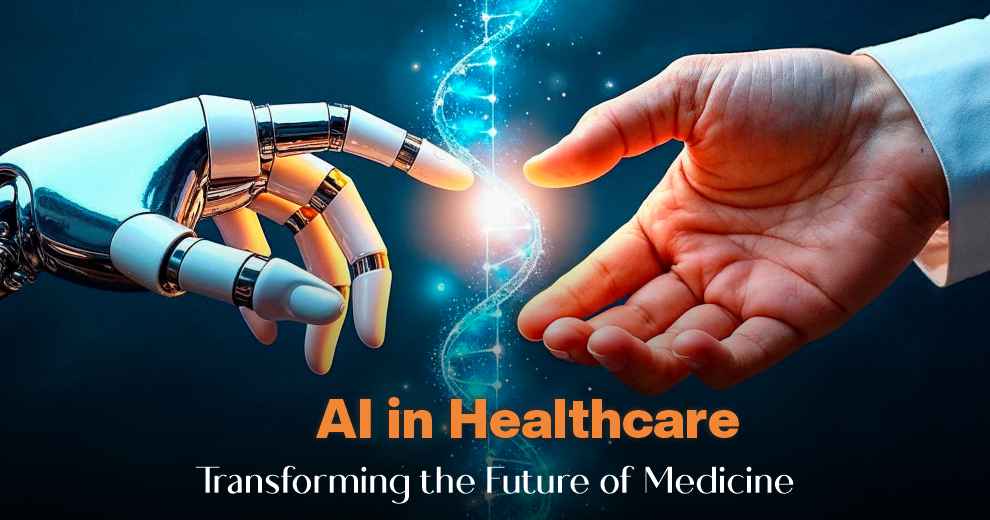
- Introduction to AI in Healthcare
Artificial Intelligence (AI) is rapidly transforming the healthcare industry by improving how diseases are diagnosed, treated, and managed. AI refers to computer systems that can perform tasks that usually require human intelligence, such as learning, reasoning, and decision-making. In recent years, healthcare organizations around the world have started adopting AI technologies to enhance patient care, reduce medical errors, and improve the overall efficiency of hospitals and clinics.
- AI in Disease Diagnosis
One of the most important uses of AI in healthcare is disease diagnosis. AI-powered systems can analyze large amounts of medical data, including patient records, lab reports, and medical images, much faster than humans.
- AI tools help detect diseases such as cancer, heart disease, and neurological disorders at an early stage.
- In radiology, AI algorithms analyze X-rays, CT scans, and MRIs to identify abnormalities that may be difficult for doctors to detect.
- Early detection allows doctors to start treatment sooner, increasing the chances of successful recovery.
- Personalized Medicine
AI is also playing a major role in personalized medicine. Each patient has a unique medical history, genetic profile, and lifestyle. AI systems analyze this information to recommend treatments tailored to each individual.
- AI helps doctors select the most effective medications and treatment plans.
- For example, oncologists can use AI to choose the best therapy for cancer patients based on their genetic data and previous treatment responses.
- AI in Drug Discovery and Development
Developing new medicines traditionally takes many years and costs billions of dollars. AI is helping researchers speed up this process.
- AI analyzes large biological and chemical datasets to identify potential drug candidates.
- This reduces research time and lowers development costs.
- During the COVID-19 pandemic, AI helped scientists analyze virus structures and identify possible treatments and vaccines more quickly.
- Improving Hospital Management and Patient Care
Hospitals generate large volumes of data every day. AI-powered systems help manage and organize this information efficiently.
- AI chatbots and virtual assistants answer patient queries.
- They help schedule appointments and provide basic health guidance.
- This reduces the workload for doctors and hospital staff, allowing them to focus more on patient care.
- AI in Robot-Assisted Surgeries
AI is also used in robotic surgery systems.
- Surgical robots assist doctors in performing complex procedures with greater precision.
- These systems reduce the risk of human error.
- They enable minimally invasive surgeries, which often lead to faster recovery times for patients.
- Challenges of AI in Healthcare
Despite its benefits, AI also presents some challenges.
- Data Privacy: Medical data is highly sensitive and must be protected.
- Security Risks: Healthcare organizations must ensure strong cybersecurity measures.
- Training Needs: Healthcare professionals require proper training to effectively use AI technologies.
Conclusion
AI is revolutionizing healthcare by improving diagnosis, enabling personalized treatments, accelerating drug discovery, and enhancing hospital management. Although challenges such as data privacy and technology adoption remain, the potential benefits of AI are significant. As technology continues to advance, AI will play an increasingly important role in building a more efficient, accurate, and patient-centered healthcare system in the future.