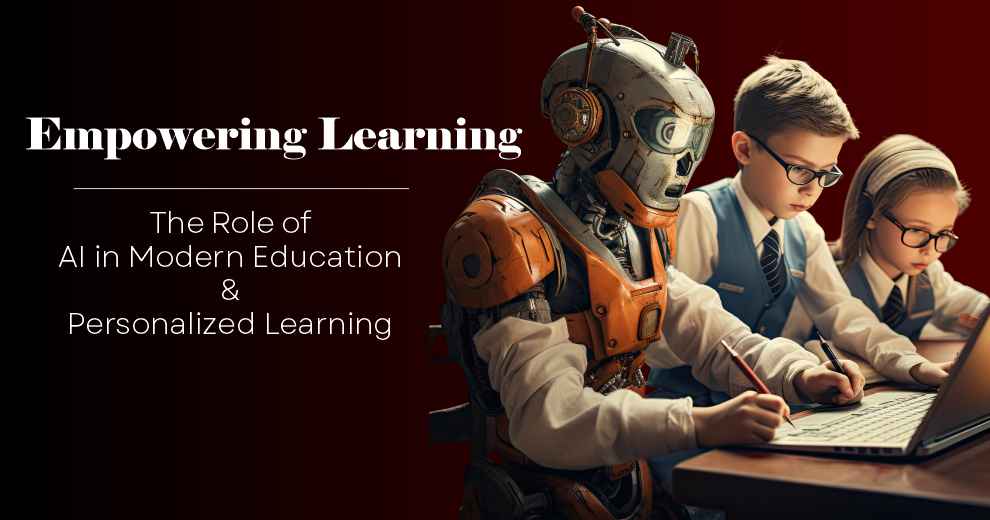
Education has always been the cornerstone of human progress, but the way we learn is undergoing a profound transformation. Artificial Intelligence (AI) is no longer a distant concept—it is actively reshaping classrooms, online platforms, and individual learning journeys. By weaving together data, adaptability, and human creativity, AI is opening doors to a future where learning is more personalized, inclusive, and effective than ever before.
The Rise of Personalized Learning
Traditional education often follows a one-size-fits-all model, where students move at the same pace regardless of their strengths or struggles. AI disrupts this by tailoring learning experiences to each individual. Intelligent systems can:
Analyze performance data to identify areas where a student excels or needs support.
Adapt content delivery—slowing down for complex topics, accelerating when mastery is shown.
Recommend resources like videos, quizzes, or interactive simulations aligned with a learner’s style.
This personalization ensures that no student is left behind, while also preventing advanced learners from feeling unchallenged.
Intelligent Tutoring Systems
AI-powered tutoring platforms act like digital mentors. They provide instant feedback, answer questions, and guide learners through problem-solving. Unlike human tutors, these systems are available 24/7, making learning accessible across time zones and socioeconomic boundaries. For example, adaptive math apps can pinpoint exactly where a student struggles and offer step-by-step guidance until mastery is achieved.
Bridging Educational Gaps
One of AI’s most promising roles is in democratizing education. With machine translation and natural language processing, students can access materials in their native languages. AI-driven accessibility tools—such as speech-to-text for hearing-impaired learners or text-to-speech for visually impaired students—make education more inclusive. This global reach ensures that quality learning is not limited to geography or privilege.
Data-Driven Insights for Educators
Teachers are not being replaced; instead, AI empowers them. By analyzing classroom data, AI can highlight trends such as:
Which topics most students struggle with.
How engagement levels fluctuate during lessons.
Predictive analytics to identify students at risk of falling behind.
This allows educators to focus on creativity, mentorship, and emotional support—areas where human connection is irreplaceable.
Future Horizons
Looking ahead, AI could revolutionize lifelong learning. Imagine personalized career training programs that evolve with industry demands, or virtual reality classrooms where students explore history by “walking” through ancient civilizations. AI will also play a role in fostering critical thinking, encouraging learners to question, analyze, and innovate rather than simply memorize.
Conclusion: A Symphony of Human and Machine
AI in education is not about replacing teachers or diminishing human intelligence. It is about amplifying potential, creating tailored pathways, and ensuring that learning is a joyful, lifelong pursuit. The future classroom will be a harmonious blend of human empathy and machine precision—a place where every learner’s journey is valued, nurtured, and illuminated.